

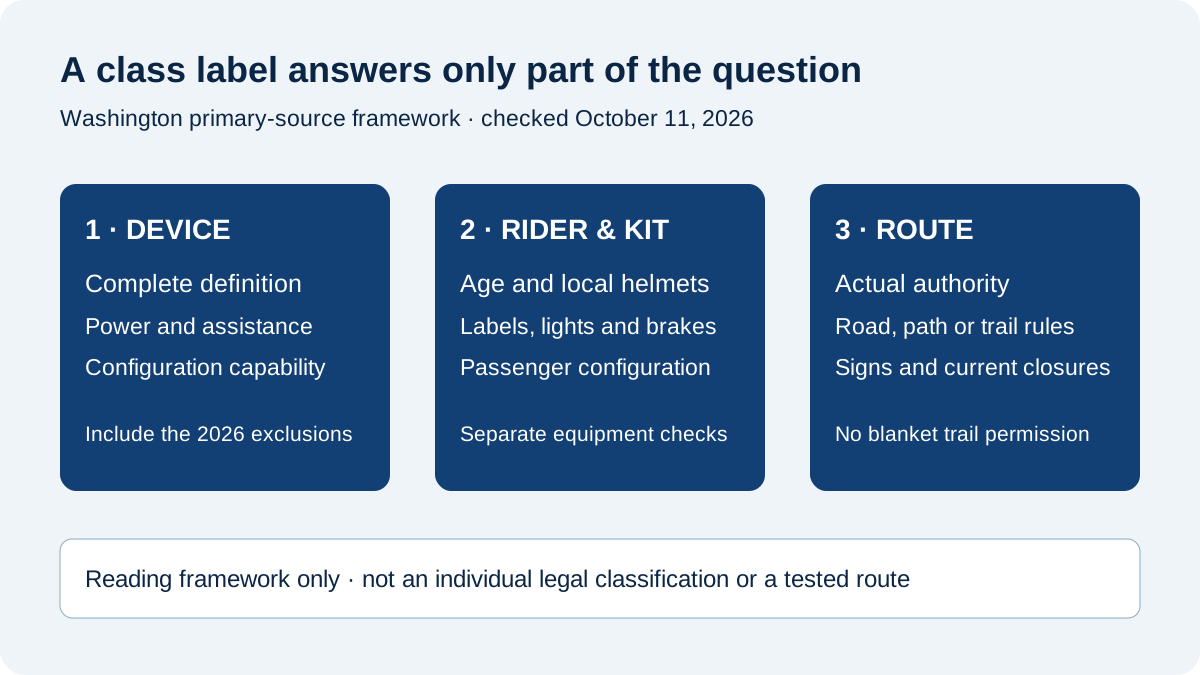
What qualifies as an electric-assisted bicycle?
RCW 46.04.169 describes a two- or three-wheel bicycle with a saddle, working pedals for human propulsion and an electric motor with output no greater than 750 W. It must also meet a class definition. The statute’s power wording is not automatically the same as a seller’s advertised peak or nominal rating.
| Class | Motor contribution | Assistance boundary | Additional check |
|---|---|---|---|
| Class 1 | Help while pedalling | 20 mph | Complete device definition and route rules |
| Class 2 | Motor-only propulsion can be available | 20 mph | Motor-only capability and configuration exclusions |
| Class 3 | Help while pedalling | 28 mph | Speedometer and operator age |
The definition changed effective June 11, 2026. It excludes vehicles capable of motor-only speed above 20 mph and vehicles designed, manufactured or intended by the maker or seller for easy configuration outside the definition, including through hardware, software or an app. Merely selecting a compliant-looking mode does not answer the capability question. Not every selectable assistance mode necessarily falls outside the definition; inspect the actual equipment and full wording rather than making a blanket judgment about a brand.
How old must an e-bike operator be?
RCW 46.20.500(3) prohibits operators under 16 from using Class 3 and says a qualifying electric-assisted bicycle needs no driver licence. That exemption does not cover every electrically powered vehicle: equipment excluded from the e-bike definition needs its actual category checked.
The Washington Traffic Safety Commission’s e-ride guide lists no operator minimum in its Class 1 and Class 2 tables. Keep that state-level summary separate from local, school, rental or land-manager conditions. It is not advice that every child can safely ride every bike. Its guide also distinguishes driver licence, endorsement and registration requirements from helmet and class-identification checks.
Does Washington require an e-bike helmet?
RCW 46.37.530 requires e-bike operators to follow applicable bicycle-helmet rules. WSDOT’s bicycle guidance states that there is no statewide bicycle-helmet mandate, while some cities and counties require helmets. “No state mandate” therefore does not mean “no helmet rule where I ride.”
Check the relevant county and municipal code for the actual location. A rule for an unincorporated county area is not necessarily the same as a city’s ordinance. This guide does not maintain a complete local helmet-law directory or determine an individual’s eligibility for an exception.
Where can each class use paths or sidewalks?
RCW 46.61.710 separates highways, shared paths, sidewalks and particular natural-surface trails. Keep the conditions below with their exceptions. A map label such as “bike trail” does not by itself identify the legal manager or surface category.
| Facility | State framework | Remaining check |
|---|---|---|
| Highway | E-bike access and parking as bicycles, subject to specified highway restrictions | Limited-access rules, signs and actual road conditions |
| Shared-use path | Class 1/2 access can be restricted; Class 3 generally requires local allowance | Within/adjacent-highway facilities and local provisions |
| Sidewalk, Class 3 | Generally prohibited, with the statutory no-alternative-path or ordinance exceptions | Exact exception and local ordinance |
| Specified natural-surface nonmotorized trail | E-bikes prohibited unless the authority with jurisdiction allows them | Land manager’s actual allowance, closures and posted rules |
State agencies and local jurisdictions can regulate facilities under their control. Federal, private and agency-specific land policies need their own review. This is not an exhaustive DNR, State Parks, national-forest or city trail inventory. Confirm the particular route before leaving rather than treating a class label as blanket access.
Which equipment and passenger checks matter?
RCW 46.37.690 requires class, top assisted speed and wattage identification on new e-bikes offered for sale or distribution, plus applicable bicycle equipment and manufacturing requirements. It addresses label replacement after speed-capability modification; a replacement label does not override the current device definition’s exclusions.
RCW 46.61.780 requires a white front lamp visible at least 500 ft during darkness, and an approved red rear reflector visible up to 600 ft under the stated lower-beam-headlight conditions. A red rear lamp supplements the reflector. The brake must allow the braked wheel to skid on dry, clean, level pavement; this is not an invitation to perform unsafe stopping tests.
RCW 46.61.760 limits passengers to the number the bicycle is designed and equipped for. Check the bike and accessories’ actual limits too. A cargo rack’s mass rating alone does not establish a passenger seating configuration.
How should I use the law finder before a trip?
Open the law finder to compare the dated class summary and follow its source links. Then identify the actual route authority, check current closures and local rules, and confirm your equipment’s capabilities. Our speed guide separates assistance cutoffs from trip speed; the commuting checklist helps you prepare the journey.
Dated references and scope
Checked October 11, 2026. This is a primary-source summary, not professional legal advice, an individual compliance decision or a complete local-code audit. The current definition and enrolled 2026 session law take precedence over an older cached definition missing the amendment.
- Current device and class definition.
- Chapter 159, Laws of 2026, enrolled PDF pages 1 and 3 inspected; definition amendment effective June 11, 2026.
- Operating and access framework.
- Age and licence provision.
- WSDOT bicycle and helmet guidance.
- WTSC operator charts; URL year/month is not inferred as a publication date.
- Equipment, helmet application and passenger provisions are linked beside their claims above.
Frequently asked questions
What changed in Washington’s e-bike definition in 2026?
Effective June 11, 2026, the definition excludes motor-only capability above 20 mph and vehicles designed or intended by maker/seller for easy configuration outside its requirements.
Do I need a driver licence for a Washington e-bike?
RCW 46.20.500 says a qualifying electric-assisted bicycle needs no driver licence. That exemption does not decide the category of an excluded vehicle.
Can a Class 3 e-bike use every bike path?
No. State law distinguishes within/adjacent-highway facilities, shared-use paths, sidewalks and specified natural-surface trails. Local and land-manager conditions matter.
Are helmets optional everywhere in Washington?
No. WSDOT says there is no statewide bicycle-helmet mandate, but applicable city and county helmet rules also apply to e-bike riders. Check the actual location.